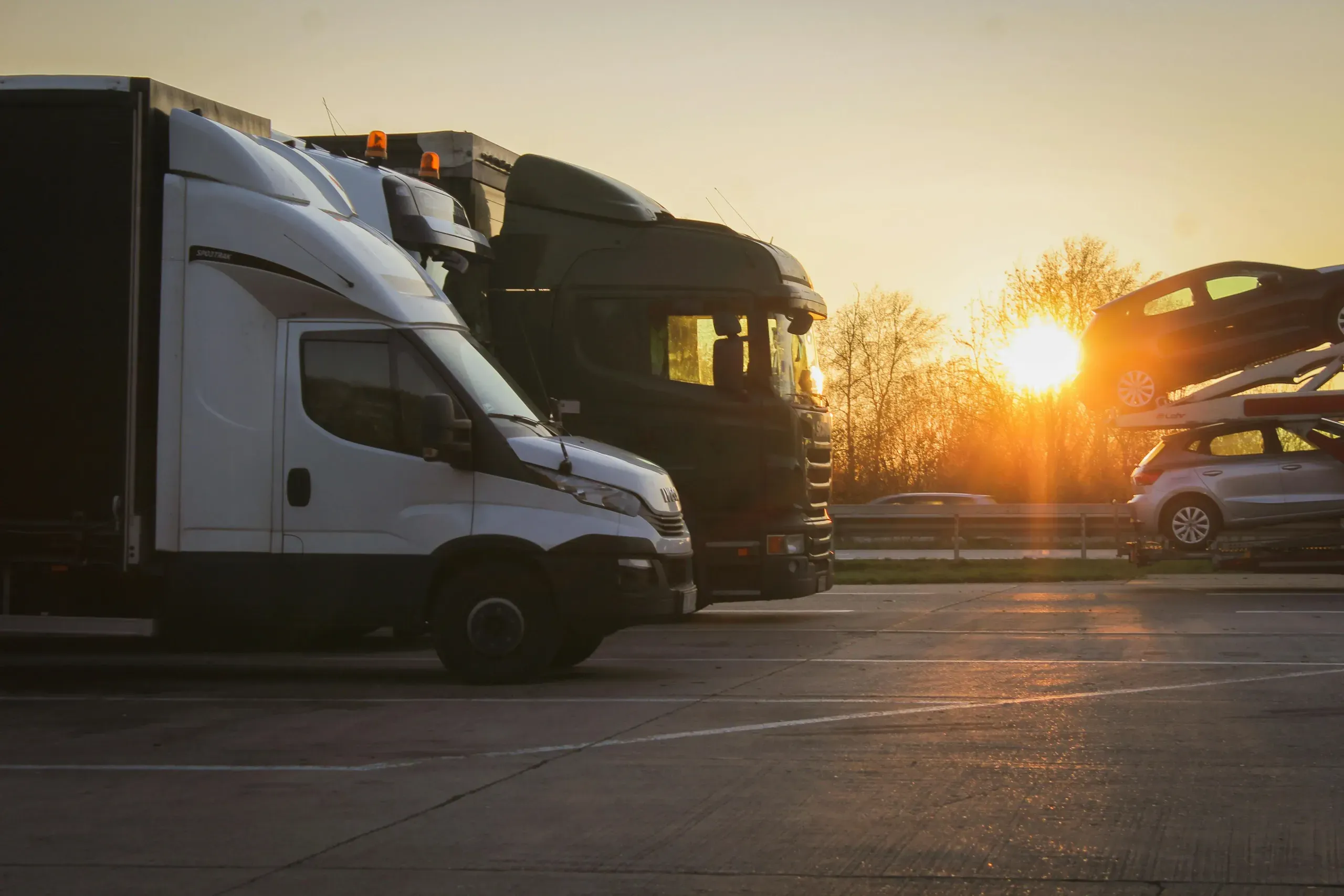
Ship Car from Kansas to Arizona
Shipping a vehicle from Kansas to Arizona covers approximately 969 miles and typically takes between three to five days for carrier transit. This route relies heavily on I-40 West, a major interstate corridor that keeps transport moving steadily across the Southwest. Throughout this page, we explain the factors that influence your final quote, how the transit timeline works, and the steps involved in booking a reliable carrier. You will also find guidance on preparing your vehicle, verifying a carrier’s credentials, and managing common shipping scenarios to ensure a straightforward experience from pickup to delivery.
- No-obligation quote within 2 minutes
- Price all-inclusive
- No charge until driver confirmed
- Distance
- 969 mi
- Transit time
- 3–5 days
- Open carrier from
- $1,100
How much does it cost to ship a car from Kansas to Arizona?
For this 969-mile journey, open transport typically ranges from $1,100 to $1,450, with $1,211 being a common average. If you require enclosed transport for extra protection, expect to pay between $2,075 and $2,775, typically averaging around $2,315. As a referral service, Ship Car Pros connects you with vetted, independent carriers who handle the actual transit, which generally takes three to five days. It is important to remember that these figures are estimates rather than fixed prices. There are seven specific factors-including vehicle size, pickup flexibility, and seasonal demand-that determine where your final quote lands within these ranges. We will break down these pricing drivers in the following sections to help you understand how to manage your budget effectively for this specific route.
What factors affect car shipping cost?
Several variables influence your final rate beyond simple distance. Understanding these drivers helps you identify ways to manage your budget for the Kansas-to-Arizona route:
- Vehicle dimensions and weight: Larger trucks and SUVs occupy more trailer space and increase fuel consumption.
- Transport type: Enclosed trailers provide premium protection but cost significantly more than standard open carriers.
- Pickup and delivery flexibility: A wider, four-to-seven-day window allows carriers to optimize their routes, often reducing your cost.
- Seasonal demand: High-traffic periods like snowbird season or summer moves naturally drive up market rates due to limited capacity.
- Route accessibility: Shipping between major metro areas like Wichita and Phoenix is cheaper than navigating to remote, rural locations off the interstate.
- Vehicle operability: Non-running vehicles require specialized winching equipment, which adds labor and complexity to the loading process.
Ship Car Pros works with our network to balance these factors, ensuring your quote reflects actual market conditions.
Open vs. enclosed car transport: which should you choose?
Most vehicles traveling from Kansas to Arizona are shipped via open transport, which is the industry standard for daily drivers, SUVs, and standard sedans. You have likely seen these multi-car trailers on I-40; they are the same method used to deliver brand-new vehicles from factories to local dealerships. With a typical cost around $1,211, it is the most efficient and cost-effective way to move your vehicle.
Enclosed transport is a premium service that protects your vehicle from road debris, dust, and weather. At an average of $2,315, this option is generally reserved for high-value collector cars, luxury exotics, or vintage models that must arrive in pristine condition. If your vehicle has extremely low ground clearance or holds significant sentimental or financial value, the extra layer of security provided by an enclosed trailer is worth the investment. Ship Car Pros can help you weigh these options based on your car's specific needs.
- Open carrier
- $1,100–$1,450
- Standard 7–10 car hauler.
- Enclosed carrier
- $2,075–$2,775
- Sealed trailer for high-value vehicles.
How long does it take to ship a car from Kansas to Arizona?
The journey from Kansas to Arizona spans approximately 969 miles and typically takes three to five days for your vehicle to arrive. Carriers usually cover about 400 to 500 miles per day once they are on the road, factoring in the time required for loading, refueling, and mandatory rest periods for drivers to stay refreshed and compliant with safety standards. While this estimate covers the standard transit time, keep in mind that weather, traffic, and your specific pickup and delivery locations can influence the final arrival date. We will look closer at how to track your vehicle's progress and the factors that might cause delays in the following sections.
Which routes do carriers usually take?
Carriers typically move your vehicle from Kansas to Arizona by utilizing a combination of major interstate arteries, with I-40 W serving as the primary corridor once they reach the Southwest. From Kansas, drivers often start on I-70 W or I-35 S to navigate out of the state’s central plains. As they transition toward Arizona, they merge onto I-40 W, which provides a consistent, high-traffic path across the region. While metro areas like Wichita and Kansas City offer high pickup density, carriers must carefully navigate urban congestion and ongoing infrastructure projects in those hubs before hitting the open highway. This route is strategically chosen for its reliable road quality.
What can delay your shipment?
While most shipments proceed smoothly, certain factors can create unexpected variability. On the I-40 corridor, winter storms near Flagstaff often cause sudden mountain pass closures, forcing carriers to wait for safe conditions. Similarly, summer monsoon season can trigger flash flooding or zero-visibility dust storms that stall transcontinental traffic. You should also account for timing gaps; pickups scheduled for late Friday often remain stationary until the following Monday due to lower weekend carrier activity. Finally, if you are shipping a vehicle from an auction facility like Copart or IAA, incomplete documentation-specifically missing gate pins or buyer numbers-frequently leads to delays that prevent drivers from entering the lot.
Popular Routes
Major city-to-city routes on the Kansas → Arizona corridor.
| From | To | Approx. distance | Transit |
|---|---|---|---|
| Wichita, KS | Phoenix, AZ | ~870 mi | 3-5 days |
| Overland Park, KS | Tucson, AZ | ~1,020 mi | 4-6 days |
| Kansas City, KS | Mesa, AZ | ~1,020 mi | 4-6 days |
| Topeka, KS | Chandler, AZ | ~980 mi | 3-5 days |
| Olathe, KS | Gilbert, AZ | ~1,020 mi | 4-6 days |
| Oaklawn-Sunview, KS | Glendale, AZ | ~880 mi | 3-5 days |
| Lawrence, KS | Scottsdale, AZ | ~990 mi | 3-5 days |
| Shawnee, KS | Peoria, AZ | ~1,040 mi | 4-6 days |
| Lenexa, KS | Tempe, AZ | ~1,030 mi | 4-6 days |
| Manhattan, KS | Surprise, AZ | ~960 mi | 3-5 days |
How does shipping a car from Kansas to Arizona work?
Shipping a vehicle from Kansas to Arizona follows a straightforward three-stage process: you request a quote, we coordinate the pickup with a carrier, and the driver completes the delivery. First, we gather your route and vehicle details to secure an all-inclusive rate. Once you accept, we assign a vetted carrier from our network to handle the transport. Finally, the driver arrives at your specified location to conduct a condition inspection before heading west. We oversee this transition to ensure your vehicle moves securely from your home in Kansas to its destination in Arizona.
What happens between booking and pickup?
Once you confirm your booking, the focus shifts to securing your spot on a carrier's route. Here is how that period unfolds:
- Load posting: We list your shipment on a private digital marketplace to attract qualified carriers currently operating along the Kansas-to-Arizona corridor.
- Carrier dispatch: A vetted driver accepts the load, and we officially assign them to your vehicle.
- Communication update: You receive a confirmation email with the carrier’s name, their MC number for insurance verification, and their estimated arrival timeline.
- Window confirmation: The driver contacts you directly to provide a specific pickup window, narrowing down the dates based on their current progress and route.
- Final inspection: On the scheduled day, the driver arrives at your location to perform a walk-around inspection, documenting the vehicle's condition on the bill of lading before loading it onto the trailer for the journey west.
We remain available throughout this window to ensure you have the support you need until the driver pulls away.
What is a bill of lading (BOL)?
The bill of lading (BOL) acts as both your official service contract and a detailed condition report for your vehicle. At pickup, the driver performs a thorough, 21-point inspection, noting any existing scratches, dents, or paint imperfections. You and the driver both sign this document to verify the vehicle's state before it is loaded. When the vehicle arrives in Arizona, you will repeat this inspection. It is critical that you review your car in good light alongside the driver before signing the final BOL. This document is your primary protection; if any new damage occurred during transit, the signed comparison between the two inspections is what validates your insurance claim.
After delivery: registration and inspection in Arizona
Once your vehicle arrives, Arizona law requires you to register it "immediately" upon establishing residency, with a 15-day enforcement guideline. Because you must surrender your out-of-state title and complete a physical Level 1 VIN inspection, this first-time registration must be done in person at an ADOT MVD office or an authorized third-party provider. If you live in or commute to the greater Phoenix or Tucson areas, your vehicle may also require an emissions test unless it is a 2021 or newer model. Be prepared to provide your out-of-state title, proof of Arizona insurance, and your driver’s license. For a complete list of required forms and to find a location near you, visit azdot.gov/mvd/.
Back in Kansas, remember that your registration and property taxes remain active until you formally cancel them. If you want to claim a prorated refund on these fees, you must return your physical Kansas license plates and submit a refund application to your local County Treasurer’s office.
How do you verify a car transport company is legitimate?
Legitimate auto transport companies operate under strict federal oversight, and verifying their credentials is the best way to ensure your vehicle is in safe hands. Every carrier must be registered with the Federal Motor Carrier Safety Administration (FMCSA), which assigns them a unique Motor Carrier (MC) number and a Department of Transportation (DOT) number. You can verify these numbers on the FMCSA’s official website to confirm the company is active, licensed, and carries the required cargo insurance.
Beyond federal registration, look for a transparent booking process. A reputable service will always provide a written agreement detailing the terms, conditions, and total costs before you commit. Be wary of any company that demands payment or a deposit before a carrier is formally assigned to your vehicle; this is a common red flag. The industry standard is to collect a deposit only once the driver is confirmed and dispatched, with the remaining balance paid directly to the carrier upon delivery.
Finally, do your due diligence by checking independent feedback. Look for consistent, detailed reviews on neutral third-party platforms like Transport Reviews or the Better Business Bureau. These sources provide a clearer picture of a company’s history and reliability than testimonials found on their own website. If a company avoids answering questions about their insurance or pushes for payment before confirming a driver, it is best to look elsewhere.
How do I prepare my car for shipping?
Preparing your vehicle properly makes the pickup process faster and helps ensure your car remains protected throughout its journey to Arizona. Follow these steps to get your vehicle ready for the carrier:
- Wash the exterior: Cleaning your car allows you and the driver to accurately document all existing scratches and dents during the initial inspection.
- Photograph the condition: Take clear, timestamped photos of every side, the interior, and the dashboard from multiple angles.
- Remove personal belongings: Clear out all loose items and remove toll tags or parking permits to comply with insurance terms and weight limits.
- Limit fuel: Keep your gas tank at approximately one-quarter full to reduce weight while ensuring enough fuel for loading and unloading.
- Secure the vehicle: Disable any alarm systems and provide the driver with a complete, labeled set of keys.
- Note mechanical quirks: Write down any known fluid leaks or tricky starting procedures to share with the driver during the walkthrough.
Taking these simple precautions allows the driver to focus on safely loading your vehicle for its trip.
Specialty shipments from Kansas to Arizona
Some shipments require more than a standard trailer. Whether you are moving a non-running project car, securing a recent auction purchase, or coordinating the transport of multiple vehicles for a household relocation, we adapt our logistics to meet your specific needs. The following scenarios involve additional preparation and coordination, so we have outlined exactly what you need to provide to ensure your transport remains on schedule.
How do you ship a car bought at Copart or IAA auction?
Shipping a vehicle purchased from an auction house like Copart or IAA requires specific documentation to ensure the carrier can gain access to the lot. Before a driver can be dispatched, you must provide us with the vehicle’s lot number, the gate pin for the facility, and your buyer number. We also require proof that the vehicle has been fully paid for, as auction houses will not release a car until the transaction is cleared in their system.
Because these facilities operate on strict appointment schedules and require drivers to navigate specific check-in protocols, auction pickups often take one to three days longer to coordinate than standard residential pickups. Providing these details as early as possible prevents unnecessary delays and ensures the carrier can retrieve your vehicle without complication. Always verify that your account status with the auction house is active and ready for third-party pickup before initiating your transport request.
How do you ship an inoperable car?
If your vehicle is inoperable, we can still coordinate its transport, but the process requires specialized equipment. Unlike functioning vehicles that drive onto the trailer under their own power, non-running cars must be winched or ramp-loaded. To qualify for this service, the vehicle must still roll, steer, and brake; if the wheels are locked or the steering is seized, standard carriers cannot safely load it. Because this requires additional labor and specialized gear, it adds to the standard shipping rate. Be sure to disclose the vehicle's condition upfront so we can dispatch a carrier equipped with the necessary winch system to handle your specific load.
How do you ship multiple cars at once?
Shipping two or more vehicles simultaneously is a smart way to streamline a household relocation or a family move. When you bundle multiple vehicles into a single order, the per-vehicle cost typically decreases compared to shipping each one individually. This is because carriers can maximize their trailer space, creating a more efficient trip for them and a better value for you.
When you ship multiple cars, we aim to keep them on the same trailer so they arrive at your Arizona destination together. In some cases, if you are moving a larger fleet, we may coordinate with multiple drivers to ensure your entire shipment stays on schedule.
Is it cheaper to ship a car or drive it from Kansas to Arizona?
Deciding whether to ship your car or drive it yourself is a balance of direct costs and personal time. The choice often depends on whether you value the convenience of having your vehicle arrive at your doorstep or the experience of the road.
If you choose to drive, the journey covers roughly 969 miles and requires about 16 hours of non-stop travel. Factoring in current per-mile operating costs, you can expect to spend approximately $798. This figure includes roughly $678 for fuel and vehicle wear, plus $120 for an overnight stay to break up the drive. Conversely, using an open carrier to transport your vehicle typically averages around $1,211.
While driving may save you a few hundred dollars on paper, it does not account for the hidden costs of the trip. You must factor in the fatigue of a long-haul drive, the expense of meals on the road, and the opportunity cost of taking time away from work or other responsibilities. Shipping offers a hands-off approach, allowing you to fly to Arizona or handle your relocation logistics without the stress of navigating I-40. Ultimately, the decision rests on whether you prefer the autonomy of the driver’s seat or the efficiency and time savings that professional transport provides.
| Ship it | Drive it | |
|---|---|---|
| Total cost | $1,100–$1,450 all-in | ~$918 (fuel + lodging + meals) |
| Your time | 0 hours | ~16 hrs driving + overnight |
| Wear & tear | None | 969 mi added; ~$0.10/mi depreciation |
| Risk | Insured in transit | Personal liability + fatigue |
For most Kansas → Arizona shipments, ship is the better value once time and depreciation are counted.
Frequently asked questions
How much does it cost to ship a car from Kansas to Arizona?
Shipping a car from Kansas to Arizona typically costs between $1,100 and $1,450 for open transport, with $1,211 being a common average. Enclosed transport is a premium service that generally ranges from $2,075 to $2,775, averaging around $2,315. These figures are estimates that fluctuate based on factors like vehicle size, seasonal demand, and the specific pickup and delivery locations within each state.
How long does it take for a car to be transported from Kansas to Arizona?
The transit time for a vehicle traveling the 969-mile route from Kansas to Arizona typically takes between three and five days. While carriers usually cover 400 to 500 miles per day, the final arrival date depends on factors like weather conditions along I-40, traffic patterns, and the carrier's specific route. Pickups scheduled near weekends may experience slight delays due to reduced carrier activity, which can shift the expected delivery timeline.
What is the difference between open and enclosed transport for my Kansas to Arizona shipment?
Open transport is the industry standard where your vehicle travels on an exposed multi-car trailer, making it the most cost-effective option for daily drivers. Enclosed transport utilizes a fully covered trailer to protect your vehicle from road debris, dust, and weather conditions. This premium method is typically reserved for luxury, exotic, or vintage vehicles valued over $75,000 that require extra security and a pristine arrival condition.
When do I pay for my vehicle transport service?
Payment is structured in two stages to ensure security for both parties. You do not pay anything until a carrier is officially assigned to your vehicle. Once a driver is confirmed, you pay a deposit to finalize the booking. The remaining balance for the transport is then paid directly to the carrier upon the successful delivery of your vehicle at the destination in Arizona.
Is my car insured while it is being transported from Kansas to Arizona?
Yes, your vehicle is covered by the carrier's cargo insurance policy for the duration of the transit. Every reputable carrier must maintain this insurance, which typically covers the vehicle from bumper to bumper. Coverage limits vary by carrier and trailer type, usually ranging from $50,000 to $250,000 for open trailers and up to $1 million for enclosed transport, providing full protection against damage during the shipping process.
Can I request door-to-door pickup and delivery for my vehicle?
Yes, door-to-door service is the standard for state-to-state auto transport. The carrier will pick up your vehicle from your specified address in Kansas and deliver it directly to your chosen location in Arizona, provided the streets are accessible for a large transport truck. If your residence is in a restricted area or on a narrow street, you may coordinate with the driver to meet at a nearby, more accessible location.
What is a bill of lading and why does it matter for my shipment?
The bill of lading is a critical document that serves as both your contract and a formal condition report for your vehicle. At pickup, the driver performs a 21-point inspection to document existing damage. You compare this report to the vehicle's condition at delivery to identify any new issues. This signed document is the primary evidence required to validate an insurance claim if damage occurs during the transport.
Does shipping multiple vehicles at once save me money on this route?
Yes, shipping two or more vehicles simultaneously often allows you to receive a multi-vehicle discount. Because carriers can maximize their trailer space, the per-vehicle cost is typically lower than shipping each car individually. This is a common and efficient strategy for families or individuals managing a full household relocation, as it streamlines the logistics and provides better overall value for the entire shipment.